



Personal Finance Essentials
How Blockchains Work
- Back to Crypto
- The Past: The History of Money
- What Motivated Satoshi to Invent Bitcoin?
- How Satoshi Invented Bitcoin
- How Bitcoin Works
- Why the Bitcoin Blockchain Requires Bitcoin
- Bitcoin Pizza Day: The First Commercial Use of Bitcoin
- How Blockchains Work
- The Problem of Double Presentment
- Two Ways to Authenticate Data on a Blockchain
- How Do We Know that Data on the Nodes are Authentic?
- Bitcoin was the First Digital Asset. Why Do We Need Any Other Coins?
- The Present: Blockchains Today
- Public and Private Keys
- Types of Crypto Wallets
- The Commercial Uses of Blockchain Technology
- The Future: Tokenization and the Future of Money
- The Risks of Digital Assets
How Blockchains Turn Data Into an
Unbreakable Chain of Truth
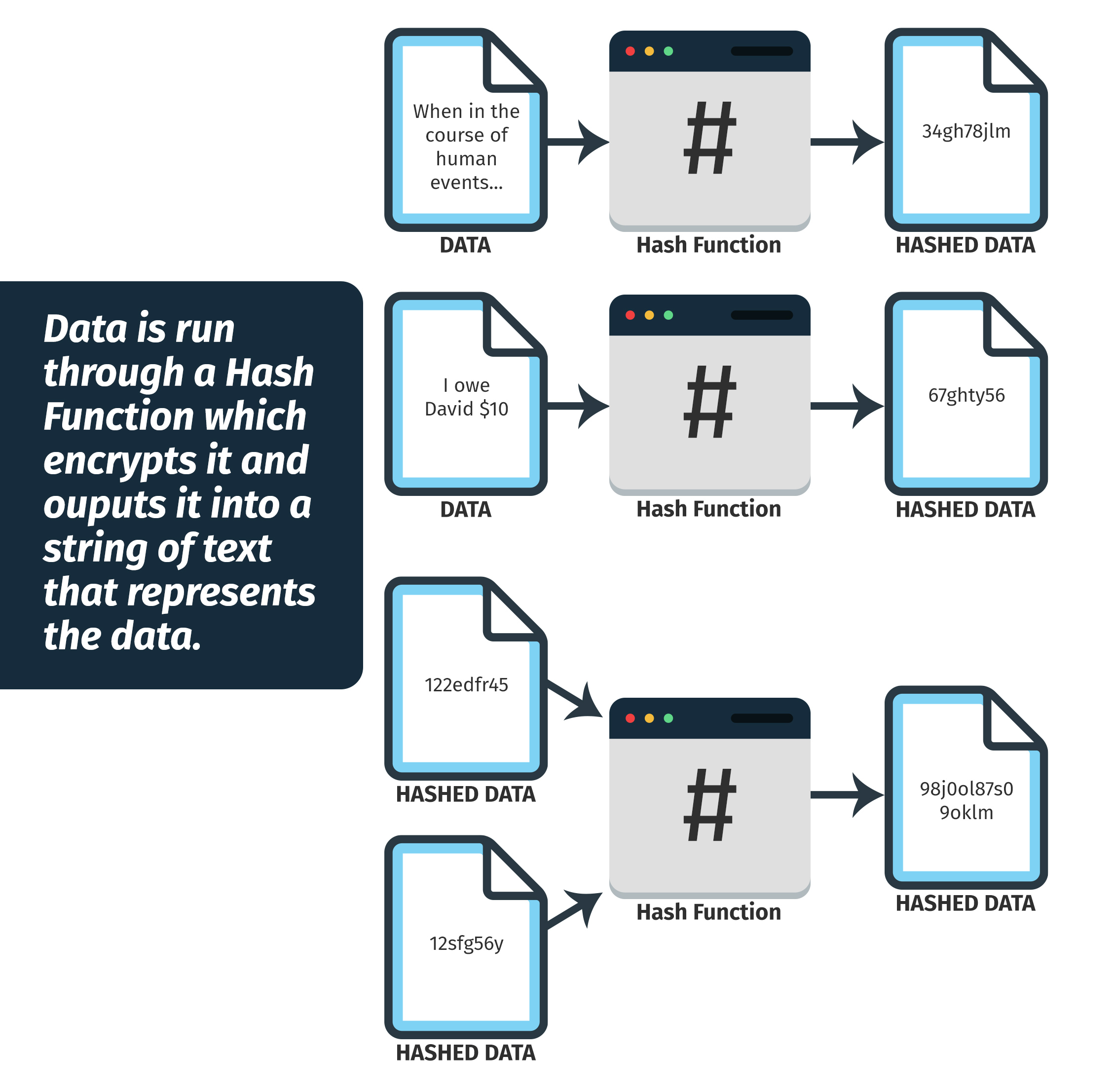
Suppose you have a document – a text, a doctoral dissertation, or a banking record showing you owe your brother $10.
Whatever the data, we’re going to convert it to a hash. A hash is a string of computer code that represents the data. If anything changes in the original document, a new hash would be created, and it would be linked to the prior one. That’s how a property’s deed that is linked to an owner is then linked to the buyer.
Each linked hash is distributed among computer nodes worldwide. Together, the linked data provide a single record that all participants agree is the single source of truth.
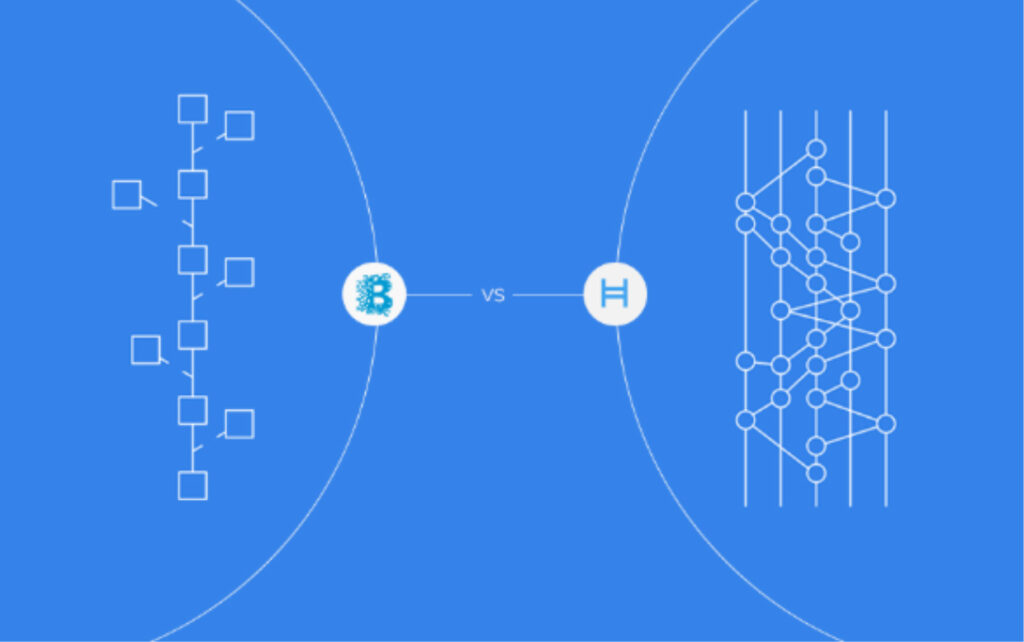
Some blockchains link data linearly. Others do it differently. Here’s a comparison of the Bitcoin and Hedera Hashgraph blockchains.
Each linked hash is distributed among computer nodes worldwide. Together, the linked data provide a single record that all participants agree is the single source of truth.
