



Personal Finance Essentials

The Risks of Digital Assets

No FDIC — No SIPC — No Safety Net

The Real Risks of Crypto

CryptoRisks2

Market Manipulation

This risk applies to every asset class. Pump and dump schemes, front-running, and insider trading are common problems in the investment world, and digital assets are not immune.

Business and Commercial Failure

Digital assets don’t materialize on their own; they are invented by entrepreneurs. An idea might be great but turning that idea into a successful business that operates efficiently, profitably, and at scale is another matter entirely. You might be investing in something that fails in the marketplace.

Technological Obsolescence

Remember the Sony Betamax? It was crushed in the marketplace by VHS video recorders – which were themselves destroyed by Netflix. Lotus 1–2‑3 was overtaken by Microsoft Excel. Encyclopedia Britannica was outdone by Wikipedia. The great innovation of today which is disrupting the marketplace could be rendered worthless by the next great innovation – destroying the price of your investment in the process.

Consumer/Investor Demand

Beware Kevin Costner Syndrome – the belief that “if you build it, they will come.” That only happens in the movies. In real life, it takes a lot more than faith to build a successful company. Just because you open a store doesn’t mean anyone will visit it – or buy anything when they do.

Consider how many ads you see every day. Companies try hard to get your attention and they’re all competing to do so. The most successful companies aren’t necessarily offering the best products; often, they simply have the best marketing.

Will the digital asset you’re buying gain traction? Or will it be ignored or quickly forgotten?

Regulatory Intervention

The digital assets field continues to be controversial. Some governments have banned them entirely. Others ban certain practices. Others limit who can buy and what, while some have imposed rules to protect consumers and investors.

Reflecting the rapid evolution of this space, many governments frequently change their minds – creating havoc for the crypto community. You must acknowledge the fact that the federal or state government could outlaw your investment or impose onerous taxes or reporting requirements. All these actions could have an adverse impact on the price of your investment.

51% Attack

A local bank branch is a tempting target for bank robbers because there’s so much money in the vault. That’s the risk of centralized systems – and it explains why so many companies have been hacked: the location of each company’s network is known and thus can be targeted.

But blockchains are decentralized; it’s like a bank having each dollar bill scattered among vaults all over the world. How could a hacker track them all down and steal them? Impossible.

A key reason why members of the crypto community are so confident about their activities is that blockchain is unhackable. Indeed, in Bitcoin’s entire history, it’s never been hacked.

Actually, it’s not impossible. There is one way a hacker could do it. It’s called a 51% Attack. To take control of the blockchain and steal its data (and assets), a hacker would have to control the majority of the network’s nodes.

With millions of nodes scattered around the world, it’s considered impossible for the bitcoin network to be hacked. The reason: the bitcoin network is so large – with tens of thousands of nodes worldwide, that it would cost billions of dollars in hardware alone for a hacker to gain control. (Although the bitcoin network is considered “too big to hack” doesn’t mean that’s necessarily true of all blockchains. Indeed, some newer and smaller blockchains have been victims of 51% attacks.)

Advances in Quantum Computing

Bitcoin private keys are long – 256-bit numbers comprised of some combination of the letters A‑Z plus the numbers 0–9. There are 1077 possible permutations. It’s simply impossible for any computer to crack the code. It would take the world’s fastest supercomputer 650,000,000,000,000,000,000 years – that’s 0.65 billion billion years – to crack a single bitcoin address.

Until quantum computing reaches the marketplace. If you wanted to find one item from a list of one trillion items, today’s supercomputers would need 10,000 years to find it. But a quantum computer could find it in 200 seconds. The fear, then, is that bitcoin’s private keys could be easily hacked by a quantum computer.

But if that’s true, couldn’t someone use a quantum computer to protect the Bitcoin blockchain? Sure – and it’s already here: The National Institute of Standards and Technology has already released several quantum-safe algorithms that can defend against attacks by future quantum computers.

In other words, if you’re worried that some guy is going to show up with a 10-foot ladder, all you need is a 12-foot wall.

Another reason not to worry: it’s unlikely that a hacker or rogue nation would use their quantum computer to hack the Bitcoin blockchain. The reason: if they did so, they’d render all bitcoins worthless; they wouldn’t be able to sell them because no one would buy them. After all, buyers know the bitcoins would just get stolen again!

Instead, the quantum computer would probably be used to hack into JPMorgan Chase. That bank has $2 trillion in deposits. Bank of America has $2 trillion, too. Wells Fargo has $1.5 trillion; Citibank $1.3 trillion, and so on. The Industrial and Commercial Bank of China has $7 trillion in cash.

But why go after cash? If they want to create havoc, they’ll take to take control of our nation’s air traffic control system, our electrical power grids, the Federal Reserve, or our nation’s nuclear weapons.

In other words, if one day there is a quantum computer that’s really able to hack the Bitcoin blockchain, and there’s no way to defend against such an attack, your bitcoin is the last thing you’ll be worried about.

Lost Passwords, Compromised Wallets and Hijacked SIM Cards

You know the importance of cybersecurity and protecting your personal information. All those careful behaviors are especially important when dealing with digital assets because, by their very definition, everything you do with them occurs online – and therefore you are at constant risk of theft by cybercrooks. Safeguard your usernames, passwords and PINs. Don’t share, forget or lose them. Watch out for thieves who use technology to illicitly access your wallets.
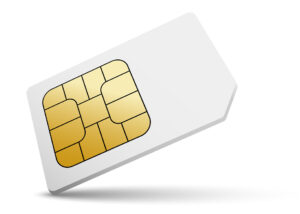
In particular, be aware of SIM card hijacking. Your SIM card is a removable memory chip in your smartphone. It stores information about you and lets you connect your phone to your provider’s network, so you can make phone calls and access the internet.

Thieves don’t have to physically steal your phone to get your SIM card. Instead, all they need is your phone’s PIN. With that info, they can access your phone.

So, is your PIN safe? Well, in August 2021, T‑Mobile was hacked – exposing the Social Security numbers, driver’s licenses – and yes PINs – of 50 million customers.

That PIN is big deal, because when you call for service, a T‑Mobile employee will ask to you confirm your PIN before they agree to make any changes to your account. So, if a scammer has your PIN, they can impersonate you when talking to T‑Mobile. (And this applies to all cell providers, not just T‑Mobile.)

With your PIN in hand, it’s easy for the crook to convince your cell phone carrier to have the SIM card that’s linked to your phone number changed to a new SIM card and phone. By doing so, the crook takes over your phone number – and therefore access to all your online accounts – including the two-factor authentication codes you receive through text messages. That means all your financial accounts are at risk, including bank and brokerage accounts and, of course, your digital asset accounts and wallets.

Before you realize it – maybe you’re in a meeting or asleep – the crooks access your email, social media, and financial accounts, change your passwords and masquerade as you online.

Criminal Use of Crypto

Criminals, terrorists, and rogue nations love the idea of executing financial transactions without revealing their identity. So, they like crypto.

Imagine being able to buy and sell drugs, guns, and stolen credit cards without having to move money through the banking system! That’s what Silk Road facilitated in 2011. The FBI shut it down in 2013. In 2021, hackers seized control of the computer systems at Colonial Pipeline, a power company, and  demanded payment of $4.4 million in bitcoin. That same year, thieves stole $611 million in digital assets from the Polygon blockchain. It took FBI only two weeks to recover most of Colonial’s money, and Polygon’s thieves returned almost all the money within days. These crimes were solved and the money recovered quickly because digital assets leave digital footprints. (All it took was for Polygon’s CEO to issue a tweet saying it knew the hacker’s computer and email addresses. Poof! The money was promptly returned.) In 2023 the terrorist organization Hamas announced that it would no longer accept bitcoin from supporters, saying that law enforcement agencies were able to track the money back to those who are funding them.

In 2024, the U.S. Securities and Exchange Commission took 583 enforcement actions; only 33 of them involved crypto, or just 5.7% of the criminal activity investigated by the SEC.
Fraud occurs in every asset class: stocks, bonds, oil, gold, real estate, art, and more. And it’s always been that way. The very first publicly traded security in the U.S. was Alexander Hamilton’s issuance of federal bonds to repay the debts that the colonies had incurred during the Revolutionary War. Hamilton’s plan leaked, and the bonds were quickly mired in the first-ever investment fraud: insider trading. (Insiders bought colonial bonds from veterans for pennies on the dollar, knowing Hamilton would soon redeem them at par.)  In other words, ever since we’ve had investments, we’ve had investment fraud. First, we had the automobile. Then, we had car crashes – and auto thefts. 

United Nations: money laundering and other illicit activity involving cash is 2% to 5% of global GDP.

Chainalysis: money laundering and other illicit activity money involving crypto is 0.15% of total crypto usage.

Everyday Scams

Investment scams are far too commonplace. Crooks lurk everywhere, ready to trick you into giving them your money by promising outlandish returns with no risk. Criminals target stock, gold, and real estate investors – and people interested in digital assets. The Federal Trade Commission says consumers lost $164 million to crypto scams in 2021. So, be as careful when approached with an investment idea in this space as you would with any other investment.

This long list of investment risks shows that you can’t be cocky when investing in digital assets. A lot of this ecosystem operates outside the jurisdiction of most regulators, meaning operators often function with impudence. If there’s a failure, there’s no FDIC or SIPC to reimburse you.

The environment today is like it was during the Wild West – even worse. As one crypto commentator told me, “It’s not the Wild West. It’s Lewis and Clark!” Thus, it’s vital that, while you focus on how to generate a return on your money, you do everything you can to assure the return of your money.